
Don't Give Ticks a Free Ride This Summer
- Category: Blogs, Dermatology, Family Medicine
- Posted On:
- Written By: Angela Hamilton, APRN, FNP, DCNP
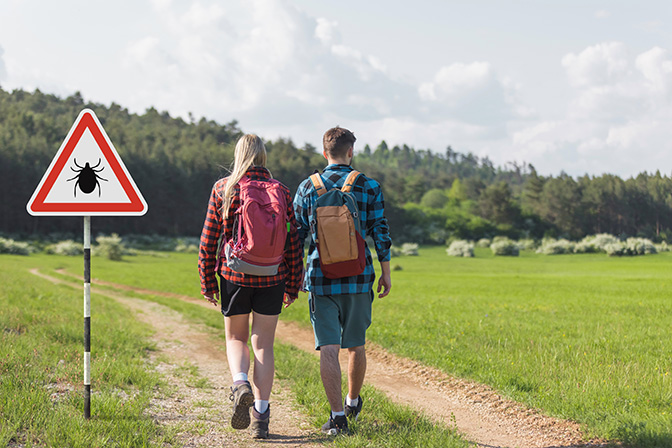
The U.S. is facing one of its most severe tick seasons in a decade.
According to the Centers for Disease Control and Prevention (CDC), weekly emergency room visits for tick bites are at their highest rates in nearly 10 years, driven by warmer winters and expanded tick habitats.
Data for April 2026 shows that 105 of every 100,000 emergency department visits were related to tick bites – the highest April rate since 2017. This year’s activity has been most severe in the Northeast. The Midwest is close behind, with Illinois and Indiana reporting above-average tick activity this year.
What are Ticks?
Ticks are often mistaken for insects, but they are actually arachnids related to spiders and mites. While many ticks are harmless, some — such as the blacklegged (deer) tick — can spread serious illnesses like Lyme disease, a bacterial infection transmitted through tick bites.
Ticks typically wait on grasses and shrubs for a person or animal to brush past, then crawl onto the body to feed. They cannot fly or jump, and ticks found on the scalp usually crawl there from lower parts of the body.
Reduce Your Exposure
Reducing exposure to ticks is the best defense against tickborne diseases, the CDC states. Here are some tips to help prevent tick bites:
- Use repellents: Apply EPA-approved repellents containing DEET, picaridin, or oil of lemon eucalyptus to exposed skin.
- Dress defensively: When hiking or walking in wooded or grassy areas, wear light-colored, long-sleeved clothing and tuck pants into socks. Walk in the center of trails to avoid contact with vegetation.
- Check thoroughly: Always perform thorough tick checks on yourself, your children, and your pets after spending time outdoors.
Removing Ticks
Ticks should be removed as soon as possible. Removing a tick within 24 hours can help reduce the risk of Lyme disease.
Fine-tipped tweezers are the gold standard for tick removal. Grasp the tick as close to the skin’s surface as possible and pull upward with steady, even pressure without twisting. Thoroughly clean the bite area and your hands with rubbing alcohol or soap and water afterward.
Do not apply petroleum jelly, nail polish, heat (such as a match), or essential oils to the tick. These methods can agitate the tick and cause it to regurgitate fluids into the bite wound, increasing the risk of infection.
If you are using sunscreen, apply it first and insect repellent second. See a healthcare provider if you develop a fever or rash after a tick bite.


.jpg)